
Gold prices extended losses for the fourth straight day by losing Rs 325 to Rs 31,100 per ten grams on stockists selling.

Indian retail investors continue to sell gold ETFs.

They have sought data from these companies on loss absorption capacity in case of a fall in gold prices and higher defaults.

Goods from sectors, including agriculture, precious stones, chemicals, pharma, medical devices, electricals, and machinery may get impacted if the US will go ahead with imposing reciprocal tariffs on Indian products, according to experts. They said that these sectors could face additional customs duties from the Trump administration because of the high tariff differential or gap, which is the difference between the import duties imposed by the US and India on a product.

The price of gold in India seems to have bottomed out.


Gold prices were ruling at Rs 26,385 per ten gram at the bullion market while silver was quoted at Rs 34,000 per kg.
In our view, gold is a must in every portfolio. However, the extent to which you should be invested in it should depend on your overall asset allocation.

Investors should tilt their portfolios towards domestic-facing defensive sectors, which should help provide stability and shield them from geopolitical and tariff risks.
Globally, gold prices fell by 0.3 per cent to $1,194.10 an ounce in Singapore on speculation that a rally to a two-week high will erode demand as dollar strengthens.

Gold looks cheap compared to the stock markets that are highly overbought at the moment.

Gold in Singapore advanced as much as 1 per cent to $1,202.08 an ounce.

Traders said slackened demand at prevailing higher levels amid a weak global trend mainly kept gold prices while silver recovered on some buying from industrial units.

Traders said besides sustained selling by stockists, a weakening trend in overseas market mainly weighed on gold prices.
.jpg)
Gold prices have eased off in recent months after the formation of a new government bringing in positive sentiment back to the stock market.

On the domestic front, gold of 99.9 and 99.5 per cent purity plunged by Rs 290 each to Rs 30,310 and Rs 30,110 per ten grams, respectively.

India retains its number one position in gold consumption in 2009, recording a total demand of 405.8 tonnes.

In Delhi, gold of 99.9 and 99.5 per cent purity fell by Rs 130 each to Rs 30,600 and Rs 30,400 per 10 grams, respectively.

India's merchandise exports dipped by about one per cent to $38.01 billion in December 2024 against $38.39 billion a year ago, according to government data released on Wednesday. Imports increased by 4.8 per cent to $59.95 billion in December 2024 compared to $57.15 billion in the year-ago month.
Traders said apart from subdued demand from jewellers and retailers, a weakening global trend on easing of tensions in Ukraine mainly kept pressure on gold prices.

The trade war between the US and China is expected to benefit Indian exporters in increasing their shipments to the American market, sources said. They said the country was the fourth-largest gainer when the US imposed higher duties on Chinese goods during US President Donald Trump's first tenure.

Invest with a 5 to 7 year horizon so that you are able to ride out price volatility and benefit from the long-term trends of demand and macroeconomic shifts.
Traders said the fall in gold prices was mostly in line with a weak trend in the global markets as signs of easing tensions in Ukraine curbed demand for the precious metal as a haven.

The government on Tuesday slashed the import tariff value on gold and silver to $59 per 10 grams and $ 470 per kg respectively, following weak global cues.
Gold prices in Mumbai hit a five-month low at Rs 8,800 (99.5) and Rs 8,850 (99.9) per 10 gram on Thursday following a decline in the global prices and falling demand in the domestic market.

For last fortnight, the tariff value of gold was fixed at $382 per 10 grams and silver at $516 per kg.

Given the economic trends, it might make sense to allocate some savings to gold.

Ask rediffGURU and PF expert Milind Vadjikar your insurance, stocks, mutual fund and personal finance-related questions.

Marketmen said the persistent fall in gold prices to increased selling by selling after the Reserve Bank eased curbs on import of the yellow metal, allowing select trading houses, in addition to already permitted banks, to procure the precious metal to boost exports.

Gold is seen as a preferred asset for all types of investors, even central banks.

Crorepatis build wealth through disciplined saving, smart investing, and strategic risk-taking, proving that true financial freedom is earned, not inherited, says Ramalingam Kalirajan
Gold prices have come down to Rs 27,790 per 10 grams in the national capital this month from the high of Rs 32,990 per 10 grams in April.
Though gold prices have been softening in the last couple of weeks, in the past decade, gold has appreciated around seven-fold in value. Here's the answer to if you should buy, hold or sell gold now.

Traders said stockists selling in line with a weak global trend as stronger dollar reduced appeal for the precious metal, led to decline in gold prices.

Continuing its losing streak for the third day, gold prices drifted by Rs 155 to settle at Rs 28,175 per ten gram in the national capital today on sustained selling by stockists, tracking a weakening global trend.
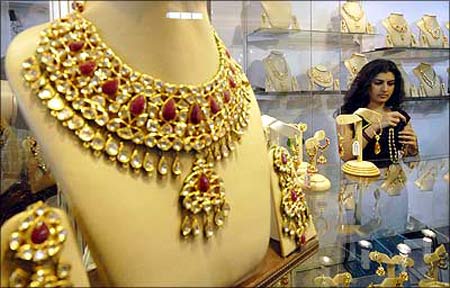
Gold prices on Friday fell by another Rs 25 to Rs 27,225 per ten grams at the bullion market in the national capital due to slackened demand at prevailing levels from jewellers and retailers amid a weak trend overseas.

Snapping its losing streak, gold prices recovered by Rs 40 to Rs 27,240 per 10 grams in New Delhi on Wednesday on emergence of buying at existing lower levels amid a better trend in global markets.

You also avoid capital gains tax during redemption in case the gold price is higher, making them tax efficient.

Gold prices this year are higher than last year, and the goods and services tax is an additional burden for consumers
A report from the World Gold Council says that rising demand for luxury goods from India and China may drive the gold prices to a new peak in the next year.
